You'd think moving to a foreign country would make everything harder. But talk to retirees who've made the move, and you'll hear the opposite about certain daily tasks. Whether it's getting to the pharmacy without a car or actually understanding your medical bill, some things work better once you leave the States.
These aren't tourist conveniences - they're the practical realities that shape your day-to-day life. Here's what actually gets simpler.
Seeing a Doctor Without the Insurance Maze
You walk into a clinic, see a doctor within the hour, and pay $30-50 out of pocket. No referrals, no pre-authorization calls, no wondering if your insurance will cover it. That's standard in places like Thailand, Portugal, and Mexico.
Countries with public healthcare systems often let legal residents access the same care as citizens. In Portugal and Spain, you'll pay around $150-175 monthly for private health insurance that covers most everything. Slovenia's public system charges around $80 monthly and provides good quality care, particularly in major cities where English-speaking doctors are available.
- Prescription costs drop dramatically - what costs $200 in the U.S. might be $15 in Mexico or Thailand
- Dental and vision care cost 50-70% less, often included in standard coverage
- Medical bills are transparent upfront - no surprise charges six months later
Many countries require proof of health insurance for residency visas, but private international coverage costs less than Medicare supplements and often provides better coverage.
Living Without a Car (and Not Missing It)
Most retirement destinations abroad weren't built for cars - they were built for people. That means walkable neighborhoods where your bank, pharmacy, and grocery store sit within a 10-minute walk. Public transport in cities like Ljubljana, Lisbon, and Kuala Lumpur costs $35-45 monthly and actually runs on time.
No car means no insurance payments, no maintenance costs, and no worrying about driving as you age. Taxis and ride-shares cost so little - often $3-5 for cross-town trips - that you'll use them guilt-free when you don't feel like walking.
Banking That Makes Sense
Opening a local bank account takes one visit and maybe 30 minutes. You'll need your passport, proof of address, and residency permit. Most banks in retirement hotspots have staff who speak English, and many offer online banking in English too.
- Monthly fees are minimal or nonexistent if you maintain a small balance
- Transferring money between accounts happens instantly, not in 3-5 business days
- ATMs don't charge $3-5 per withdrawal - most countries cap fees at $1 or less
You'll still need your U.S. bank account for Social Security deposits and stateside bills. But for daily spending, a local account eliminates foreign transaction fees and makes paying rent or utilities straightforward.
Running Errands on Foot
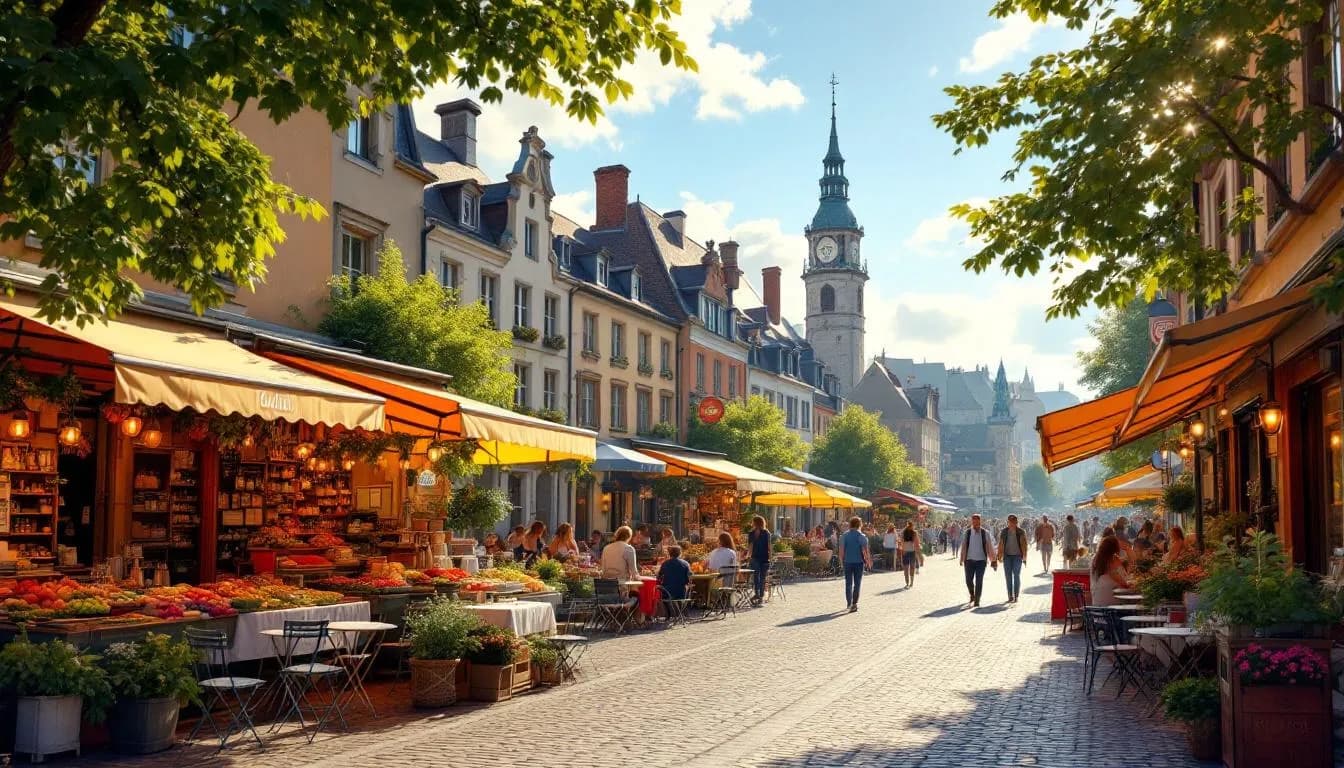
The corner store culture means fresh bread, produce, and basics sit within a few blocks. Farmers markets run multiple days a week, pharmacies dot every neighborhood, and you'll find small shops that actually know your name. Groceries in Malaysia cost around $200 monthly, while Slovenia runs about $350 - both with better produce quality than most U.S. supermarkets.
Services come to you more often too. Plumbers, electricians, and handymen typically charge $20-40 per hour instead of $100+, and they'll show up when they say they will. Home maintenance becomes less stressful when fixing something doesn't require a second mortgage.
Ready for the next step?
Check out our country-specific guides to see exactly how to apply these steps in your dream destination.
Browse Country Guides