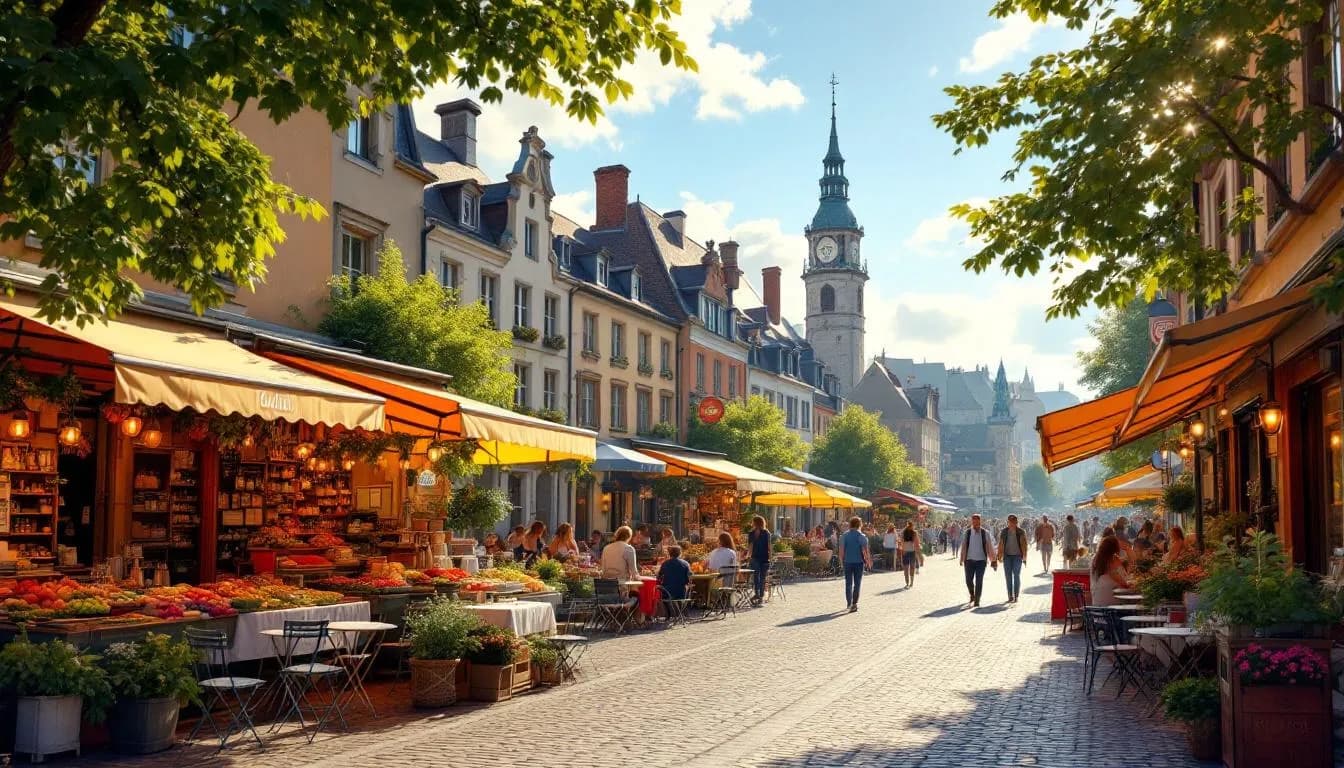
Before you move, everything about life abroad sounds exhausting. A foreign language at the pharmacy. Banking systems you don't understand. Grocery stores with no familiar brands. Your brain fills in the blanks with worst-case scenarios.
Here's what actually happens: within a few months, you're doing laundry, picking a favorite café, and knowing exactly which checkout line moves fastest. The day-to-day gets ordinary fast - and that's a good thing.
You Build Routines Faster Than You Expect
Within a month or two, you'll have a regular grocery store, a favorite walking route, and a pharmacist who recognizes your face. The mental load of living somewhere new drops sharply once the basics are sorted.
- You learn which stores carry what you actually want
- You stop mentally translating signs - you just know what they mean
- You develop shortcuts and preferences, same as you had back home
- Errands stop feeling like events and start feeling like errands
Most Days Don't Require Much Language
Language barriers are real, but most daily interactions are short and predictable. Buying bread, paying for coffee, nodding hello to a neighbor - none of that requires fluency. You pick up the phrases you need pretty quickly.
The harder conversations - a doctor's appointment, a bank meeting - still take effort. But your average Tuesday? You'll manage fine.
In countries with strong English proficiency like Portugal, Malaysia, or Slovenia, you'll find English speakers when it counts. In places like Mexico or Thailand, you'll pick up enough of the local language for daily life faster than you think.
The Infrastructure Is Already There
Your new city has buses, banks, pharmacies, and grocery stores. They work a little differently than back home, but they work. Millions of people already rely on them every day.
- Public transit in Portugal and Poland is often better than what you left behind
- Private healthcare in Thailand and Malaysia runs smoothly once you know the process
- Panama uses U.S. dollars, which cuts out one whole layer of hassle
- Internet is reliable in Thailand, Vietnam, Portugal, and Spain - you won't feel cut off
The Hard Parts Only Need Figuring Out Once
The things that feel intimidating at first - renewing your visa, dealing with healthcare, sorting out your tax situation - you only have to work through them once. After that, you just repeat the process.
That first pharmacy visit might be stressful. The second one is routine. You build competence, and competence makes everything feel smaller. The hard parts don't go away - they just stop being hard.
You Have More Control Over It Than You Think
Don't like the local grocery store? Try another one. Want more English-speaking friends? There's probably an expat group already meeting somewhere nearby. Craving familiar food? Most major expat cities have import shops or restaurants that cover that.
You're not stuck accepting everything exactly as it comes. You still have agency - you're just more intentional about using it because you had to think about it more deliberately.
This is especially true in established expat destinations like Mexico, Portugal, and Thailand, where there's already infrastructure built around helping newcomers settle in quickly.
Ready for the next step?
Check out our country-specific guides to see exactly how to apply these steps in your dream destination.
Browse Country Guides