Before you leave, everything looks like a problem waiting to happen. The lease in a language you don't speak. The pharmacy where nobody knows English. The bus system you've never touched. It's easy to convince yourself you're not equipped for this.
Then you arrive, and something shifts. You figure things out — not perfectly, not all at once, but you handle them. The lease? You work through it slowly, look up words, ask questions. The pharmacy? You point, use your phone, and walk out with what you needed. It works.
Competence Builds Faster Than You Expect
It's not a sudden breakthrough — it's repetition. The first time you order at the corner café, you've rehearsed it twice. The tenth time, you're just ordering coffee. By the twentieth, you're making small talk with the owner.
The same pattern plays out with banking, shopping, transit — all of it. What felt complicated in month one is routine by month three. You build a mental map of your neighborhood. You learn which market has the best produce and when it opens.
- You learn to read context clues when you don't catch every word
- You develop workarounds for things that don't work how you expected
- You figure out which situations need precision and which ones are forgiving
- You build a short list of people and places to turn to when you need help
Most Daily Tasks Don't Require Fluency
Here's something retirees don't realize until they're actually living it: most daily tasks don't require perfect communication. You need enough to get the job done, not fluency. Buying vegetables? You point and use numbers. Asking for directions? People can tell you're lost and generally want to help.
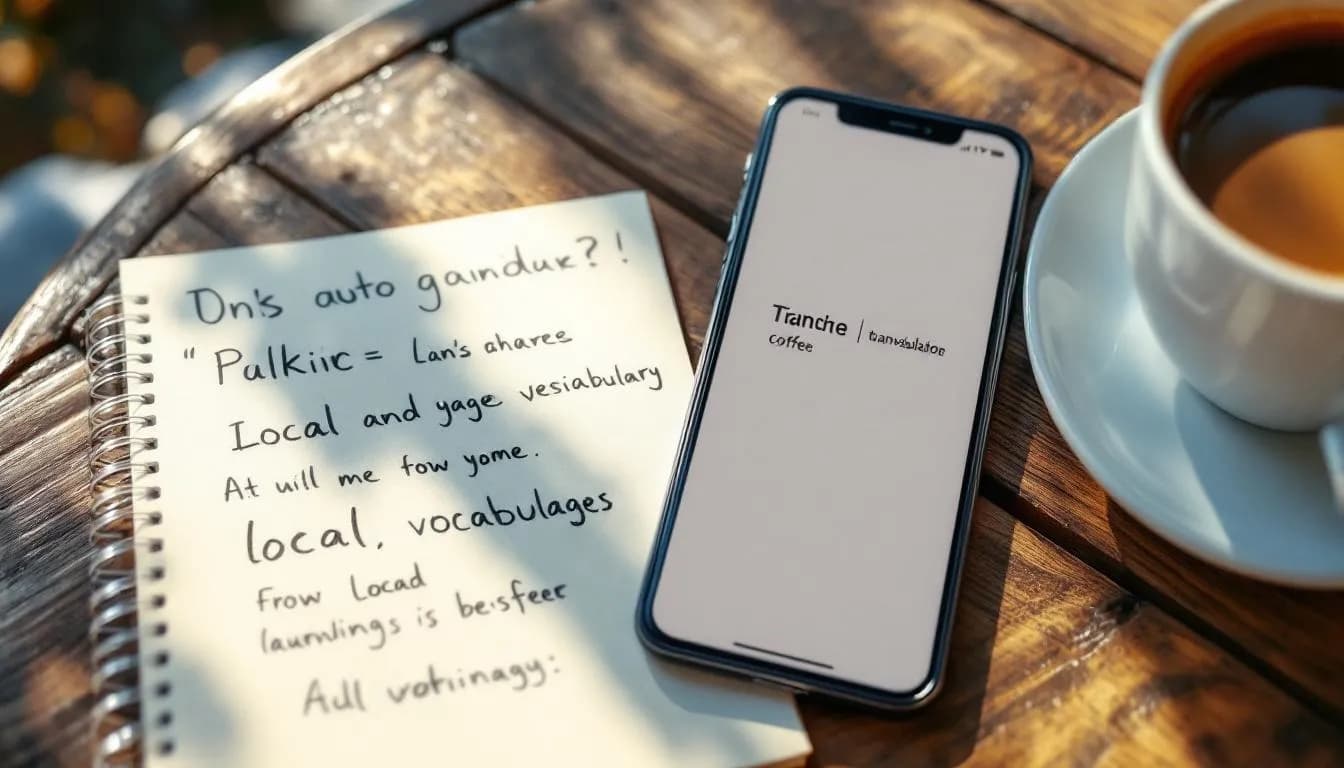
Technology closes a lot of gaps too. What helps more than translation apps is discovering how many services already have English options or visual interfaces. Banking apps look similar everywhere. Google Maps works the same in Medellín as it does in Lisbon.
The tasks that scared you most before you moved usually become routine within a few months. It's the unexpected curveballs that come later — and by then, you've got the confidence to handle them.
Skills You Didn't Know You Had
Living abroad surfaces abilities you never had reason to use before — problem-solving with limited information, staying calm when plans fall apart, getting comfortable not knowing everything in advance.
The first time your internet goes out and you can't call support in English, it feels awful. But you figure it out — a neighbor helps, a translation app gets you through, or you walk to the office and sort it out in person. By the third time something like that happens, you're not worried. You know you'll manage.
What Stays Hard — and Why That's Okay
Some things don't get easy. Complex bureaucracy, healthcare situations beyond routine visits, emergencies — those stay hard. But your relationship with hard changes. You stop assuming you can't handle something and start asking how you will handle it.
You also get better at picking your battles. Confusing government form? Hire someone to help. Shop that only takes cash? Carry cash. Restaurant with no English menu? Point at what looks good. None of these are defeats — they're just how it works.
Six Months In, You'll Barely Recognize Your First Week
Look back at your first weeks from six months out, and they'll feel like a different life. Transactions you agonized over are automatic. Your neighborhood is familiar. You've got a short list of people you trust — a doctor who speaks some English, a neighbor who doesn't mind questions, a handyman who shows up.
This isn't about becoming a different person. It's the same way you learned to drive or figured out a new job — it starts daunting, gets challenging, then manageable, then normal. Life abroad follows the same arc.
The best predictor of success abroad isn't your language skills or how much research you've done. It's whether you're willing to try things, get it wrong sometimes, and keep going anyway.
Ready for the next step?
Check out our country-specific guides to see exactly how to apply these steps in your dream destination.
Browse Country Guides